

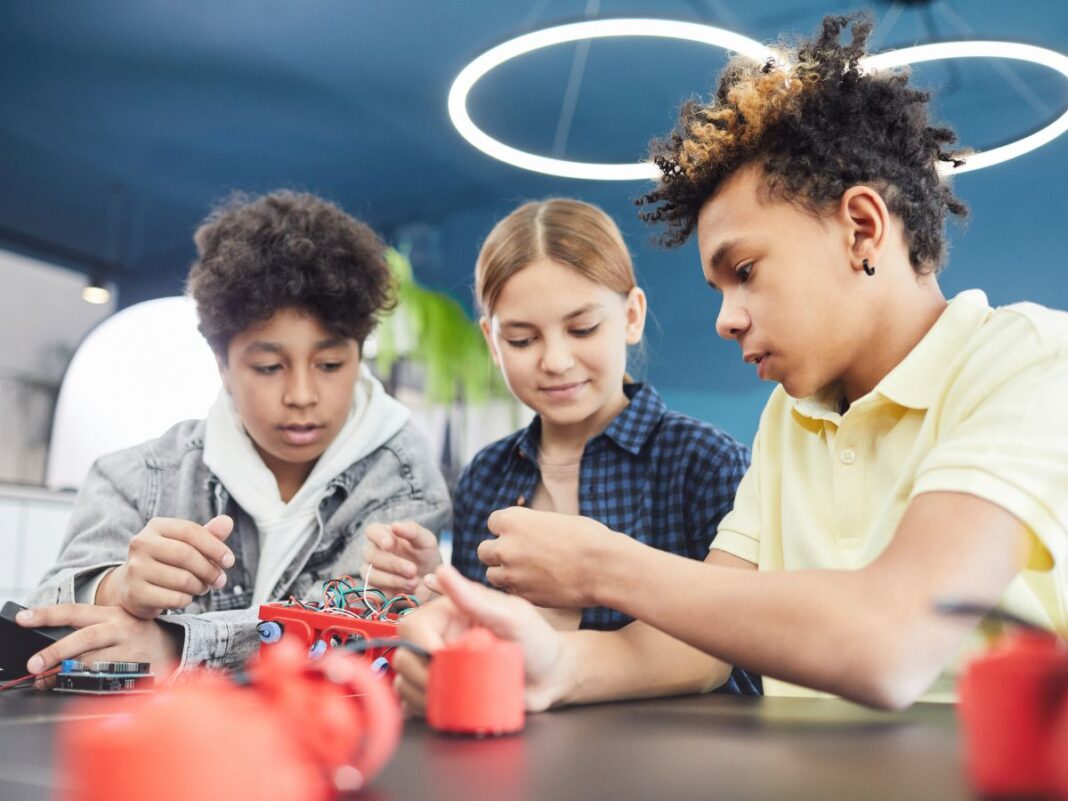
If you walk into a Redwood Springs classroom, you might not see rows of desks or students quietly filling out worksheets. Instead, you might hear a group of fifth graders debating how to allocate clean water in a drought-stricken region. Or see second graders building scale models of their dream playgrounds — after calculating area and perimeter.
That’s because the school uses a project-based learning model, or PBL. At its core, PBL means that students learn through in-depth projects connected to real-world topics. It’s hands-on and often collaborative. Students might research, interview community members or present their findings to an audience.
“People sometimes think it’s unstructured, but actually, it’s very intentional,” says Sarah Penney, a fourth grade teacher at Redwood Springs. “We build in time for skill-building. The project gives it purpose.”
The goal? Help students see how learning matters in the real world — and give them the confidence to apply what they know.
Curious what this looks like day to day? Watch Sarah Penney, a fourth grade teacher at Redwood Springs Academy, explain how project-based learning takes shape in her classroom.
This content is sponsored by Redwood Springs Academy, an independent K–8 school in metro Detroit that uses a project-based learning (PBL) approach to help students connect academic skills to real-world experiences. With small class sizes, a focus on collaboration and critical thinking, and a strong commitment to social-emotional learning, Redwood Springs supports each child’s growth—both academically and personally. Learn more about Redwood Springs Academy.