


Key takeaways
- Motion sickness happens when the brain gets mixed signals from the eyes, inner ears and body.
- It’s most common in kids ages 4 to 13 and rare in babies under 1.
- Looking at phones or tablets in the car can make symptoms worse.
- Dramamine or Benadryl may help but should be tested at home first.
Spring break often means longer car rides or flights as metro Detroit families seek family time in the sun. For some kids, though, travel can quickly turn uncomfortable.
Motion sickness is fairly common in school-age children, says Michelle Faber, MD, a pediatrician at Henry Ford Health, noting that symptoms tend to peak between ages 4 and 13.
Understanding why it happens can help parents prevent it before a trip even begins.
What causes motion sickness in kids?
Motion sickness happens when the brain receives conflicting signals about movement.
“It’s caused by a disruption in signaling between your eyes and your ears and your body,” Dr. Faber says.
Your child’s inner ears control balance. When they’re sitting still in a moving car, their body may feel stationary while their eyes and ears sense motion. The brain struggles to interpret those mixed signals, which can trigger nausea, dizziness or vomiting.
Which kids are more likely to get motion sickness?
Motion sickness is uncommon in babies under age 1 but more frequent during the elementary and middle school years.
Children who may be more likely to experience it include:
- Kids ages 4 to 13
- Children who get migraines
- Kids with inner ear problems or frequent ear infections
- Girls, who tend to experience motion sickness more often
- Children with gross motor delays
Symptoms often improve after puberty, although some teens and adults still experience motion sickness.
How can parents prevent motion sickness in the car or on a plane?
Several small changes can help reduce symptoms.
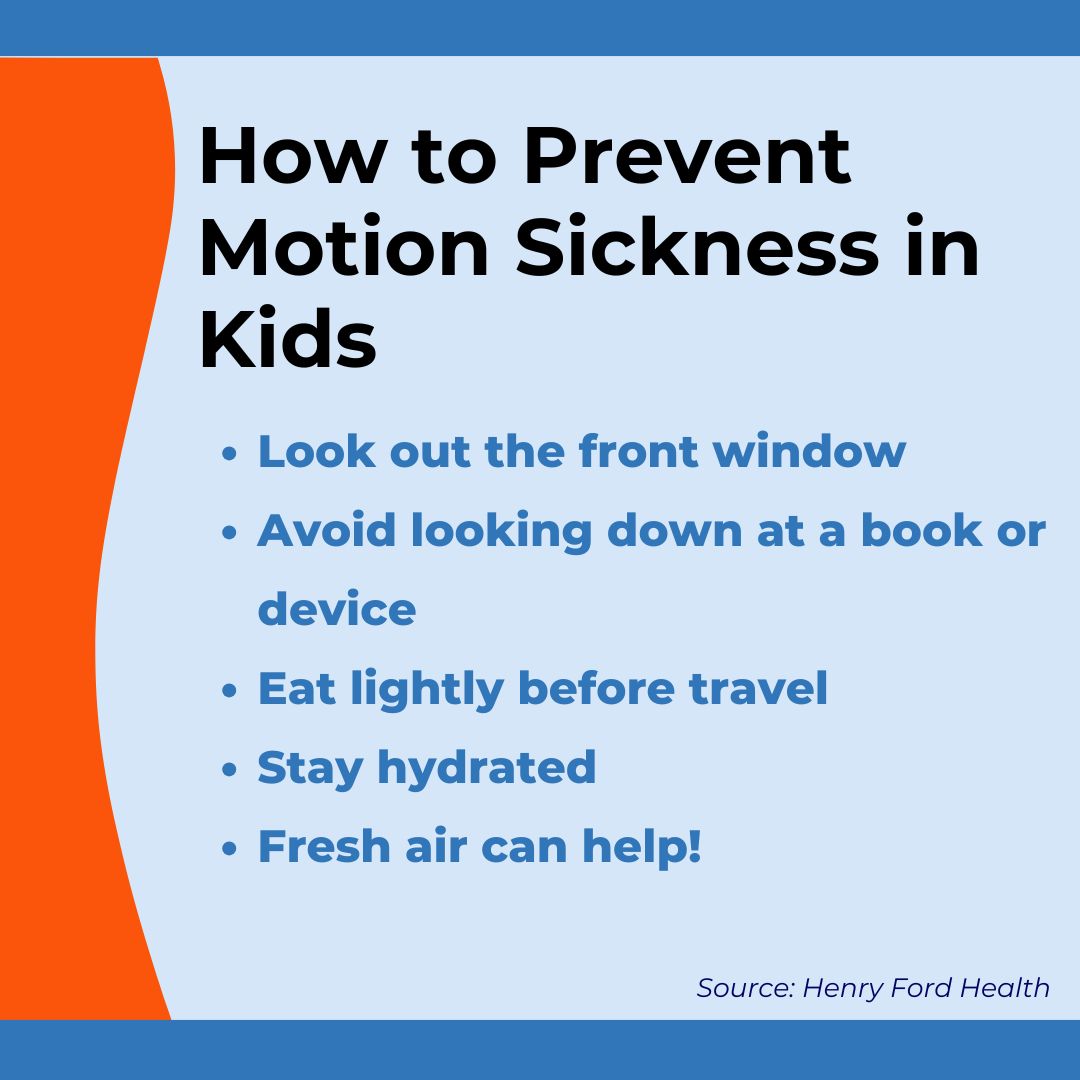
One of the biggest triggers is looking at screens during travel. “Looking at your phone or trying to read in the car can make motion sickness worse,” Dr. Faber says.
Looking down at a device increases the mismatch between what the eyes see and what the body feels.
Parents can also try these strategies:
Encourage kids to look out the front window. Looking toward the horizon provides a stable visual reference.
Keep meals light before travel. A heavy meal can make nausea worse. Staying hydrated and well rested may also help.
Choose the most stable seat when possible. Seats over an airplane’s wings or the middle of a boat typically have the least movement.
Try fresh air or rest. Some kids feel better lying back or closing their eyes to reduce visual input.
Some families also try motion sickness glasses designed to mimic a stable horizon. Dr. Faber says evidence is limited but they’re inexpensive and safe to try.
View this post on Instagram
What medications help kids with motion sickness?
For children, the medications most commonly used are older antihistamines such as Dramamine or Benadryl. “But most of the time it’ll make kids sleepy,” Dr. Faber says.
In some children, the opposite reaction can happen and they may feel jittery or anxious.
Because reactions vary, Dr. Faber recommends trying the medication at home before using it for travel.
Parents should also know that newer allergy medications — including Claritin, Zyrtec and Allegra — do not help with motion sickness.
Similarly, nausea medications such as Zofran do not work for motion-related symptoms.
Some families try natural options like ginger, mint or strong scents. While evidence is limited, Dr. Faber says there’s little harm in trying them.
When should parents talk to their pediatrician?
Motion sickness is usually harmless, even if it makes travel unpleasant.
Parents may want to talk to their pediatrician if:
- Motion sickness is severe enough to limit travel
- An infant under age 1 appears to have motion sickness
- A child also has migraines, balance problems or frequent ear infections
For many families, a few simple adjustments can make car rides and vacations much more comfortable.
This content is sponsored by Henry Ford Health. Learn more at Expert Answers to Your Kids’ Health Questions.