

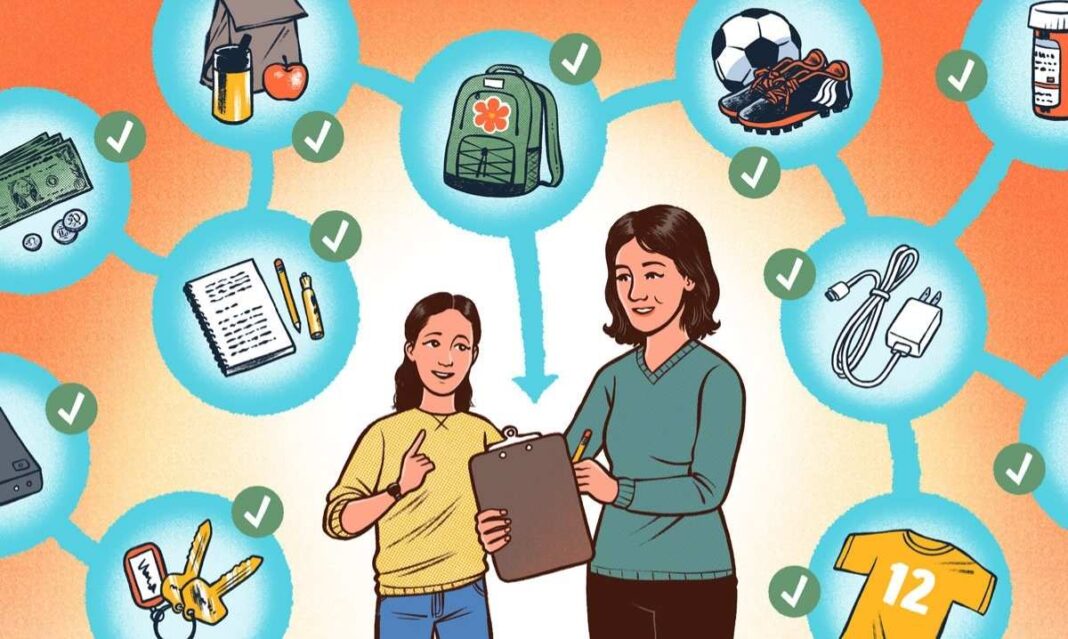
Parenting is demanding no matter what, but ADHD can make everyday routines feel overwhelming. Some adults discover their ADHD only after noticing the same traits in their children.
That makes sense because parents with ADHD are about 40% more likely to have a child with ADHD, according to Jillian Gismondi, a child and adolescent therapist with 20 years of experience at Child and Family Solutions Center in Farmington Hills.
That connection can bring challenges, but also strengths. “Parents are able to not just empathize and sympathize, but really get what that feels like and where that struggle is,” Gismondi says.
What parenting with ADHD looks like
ADHD can affect family life in very real ways. Parents may struggle with executive functioning — the mental processes that help with time management, organization and follow-through.
That might look like:
- Kids arriving late to activities
- Homework slipping through the cracks
- Forgotten appointments and missed commitments
“As a parent, you may be beating yourself up emotionally for it,” Gismondi explains. “You may have negative self-talk, like why can I not do this? Other parents can do this. What is wrong with me?”
Children, meanwhile, may see inconsistency as lack of care. From their perspective, missing a game or forgetting a pickup can feel personal — even though that’s far from the truth.
The ripple effect on kids
All kids, whether or not they have ADHD, thrive on consistency. When routines break down, children may feel anxious, resentful or angry. Some may even assume they’re not important enough for their parent to keep commitments.
For kids who do have ADHD, the experience can be mixed. “The benefit of a parent having ADHD and a child being diagnosed with ADHD is real-life experience,” Gismondi says. “They know what that feels like. But oftentimes the adults didn’t get treatment when they were young, so they’ve carried this burden that something could be wrong with them. But really, there’s nothing wrong — it just means you may have to do some things differently. And that’s the same for your child.”
Actionable supports for parents
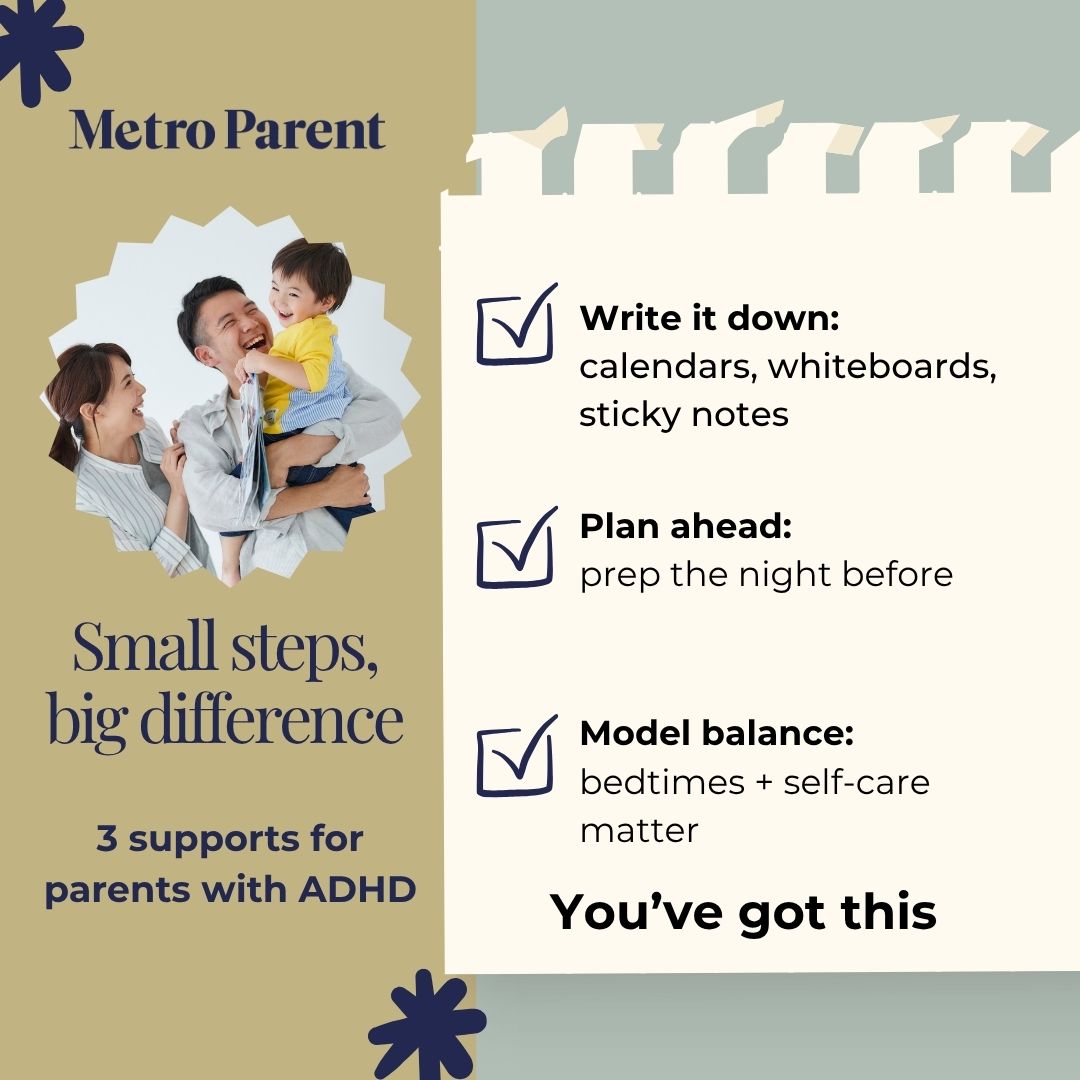
Fortunately, there are simple, practical ways to make family life smoother. Gismondi suggests these strategies:
- Create visual structure. Use calendars, whiteboards or sticky notes in visible spots to map out the day. Kids benefit from knowing what to expect, and parents get a reliable memory boost.
- Prep ahead. Pack lunches and bags at night, and set phone timers or alarms as reminders. “For the adult ADHD brain in the morning, do everything you can the night before so you can get up and do the bare minimum to get yourself ready,” she advises.
- Model self-care. Consistent bedtimes and downtime help everyone regulate. Parents who prioritize rest and healthy routines show their kids how to recharge.
- Communicate openly. Share plans with kids instead of keeping them internal. When things fall through, a simple apology shows respect and reinforces connection.
- Lean on tools. From AirTags for lost keys to dry-erase checklists on the bathroom mirror, practical aids keep tasks on track.
Support for the parent
ADHD rarely appears alone. Many adults with ADHD also experience anxiety, depression or learning challenges. That’s why support for parents is so important.
“Parents may benefit from therapy for executive functioning skills,” Gismondi explains. While treatment can include medication, therapy offers strategies for building routines, reducing negative self-talk and finding balance at home.
Seeking support can make life easier for yourself while it can help create a calmer, more secure environment for your kids.
Building connection, not perfection
Parenting with ADHD isn’t easy, but it isn’t hopeless. “Communication is key,” Gismondi says. “You’re building a relationship all the time with your child, and you want them to feel they’re in a safe and loving environment. You’re going to mess up sometimes, your kid is going to mess up sometimes, and yet you’re still there for each other.”
She also encourages parents to show vulnerability. “Be human. Have emotions. Apologize. And remember that therapy is always there for anyone who needs it,” she says.
By reaching out for help and building small, sustainable systems, parents can create calmer households and model resilience and care for their children.
This content is sponsored by the Ethel and James Flinn Foundation. Find more articles like this at Metro Parent’s A Parent’s Guide to Family Mental Health.